
TFT Display vs LCD: Key Differences for Industrial Applications
When you’re sourcing rugged screens for factories, vehicles, or medical gear, the conversation inevitably becomes TFT display vs LCD. Below, Changchun Fangguan Electronics Technology Co., Ltd. breaks down what matters—without the fluff—so you can specify the right module the first time.
Quick Answer
TFT (thin-film transistor) is a type of LCD that adds a transistor to each pixel. In practice, when people say TFT display vs LCD, they usually mean TFT active-matrix LCD versus conventional/segment or passive-matrix LCD.
Choose TFT when you need high resolution, color depth, wide viewing angles, and fast response.
Choose conventional LCD (e.g., segment, character, or STN) when you need ultra-low power, simple UI, and the lowest cost.
Key Differences at a Glance
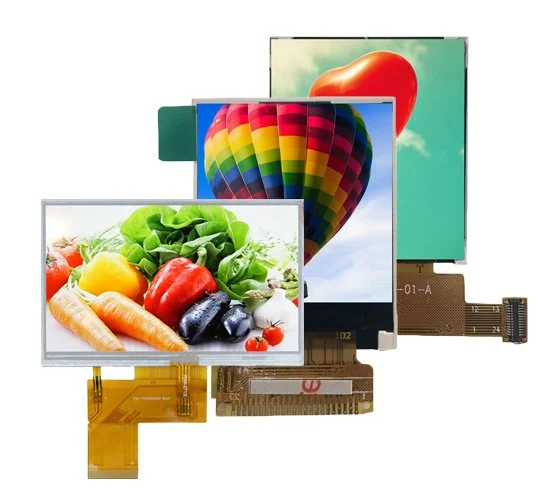
What Is an LCD?
LCD (Liquid Crystal Display) uses liquid crystals and a backlight. It can be:
Segment/Character LCD (no pixels; predefined icons/segments),
Passive-matrix dot-matrix (e.g., STN/FSTN),
Active-matrix (TFT)—a transistor per pixel for precise control.
Strengths: lowest power and cost in simple UIs, excellent for meters, thermostats, and single-function devices.
What Is a TFT Display?
A TFT display is an active-matrix LCD. Each pixel has a thin-film transistor, enabling higher resolution, accurate grayscale, wide color gamut, and fast switching.
Strengths: rich GUIs, multi-language layouts, charts, video, maps—ideal for HMIs, medical monitors, rugged tablets, and automotive clusters.
Technical Comparison (Deeper Dive)
Resolution & Image Quality
For TFT display vs LCD, TFT wins when you need dense graphics, anti-aliased text, and accurate color (e.g., process trends or medical waveforms). Conventional LCDs excel for icons and numeric readouts.
Response Time & Refresh
TFT’s active drive yields fast response and smooth refresh, reducing motion blur on dynamic UIs, cameras, and animations. Passive-matrix LCDs respond slower—fine for static values, not for motion.
Viewing Angle
IPS-TFT variants deliver very wide viewing angles with minimal color shift—critical on control panels viewed off-axis. Segment/character LCDs can invert or fade at angles.
Power Consumption
Segment/character LCDs sip power—perfect for battery devices. TFTs draw more (backlight + driver), but modern LED backlights, local dimming, and low-power modes narrow the gap.
Durability & Environment
Both can be engineered for industry:
TFT: easier to pair with optical bonding, high-brightness backlights, anti-glare/anti-UV coatings, EMI shielding, and rugged touch (cover glass).
Conventional LCD: fewer components; inherently simple and robust for benign environments.
Lifetime
Backlight life dominates. Industrial TFT modules typically specify 30,000–70,000+ hours L70 (design-dependent). Segment LCDs may last even longer due to simpler illumination needs—but they can’t match TFT’s visual capability.
Cost Considerations
Initial Investment: TFT modules cost more due to drivers, glass, backlight, and often touch stacks.
Total Cost of Ownership: If a clear GUI reduces user errors, service calls, or training time, TFT may pay back quickly. For basic readouts, conventional LCD is the economical choice.
Application Fit
Customization with Changchun Fangguan Electronics Technology Co., Ltd.
We design and build TFT and conventional LCD solutions to your spec:
Sizes & resolutions: 1.3″ to 15.6″+, QVGA to FHD
Optical options: high-brightness (≥1,000 nits), transflective, optical bonding, AR/AG coatings
Ruggedization: extended temperature, shock/vibration compliance, conformal coatings
Touch integration: resistive, G+G/G+F projected capacitive (glove/wet support)
Interfaces: RGB/LVDS/eDP/MIPI/Parallel, with matched drivers and cables
EMI/ESD design: shields, ferrites, gasketing
Tell us your environment, brightness target, interface, and lifetime goals—we’ll map you to the right TFT or LCD stack.
Selection Checklist (Copy/Paste for Specs)
Target use case and UI complexity (static vs dynamic, color needs)
Brightness (nits) and ambient light (indoor/outdoor/sunlight)
Viewing angle requirement (e.g., ≥80°/80°/80°/80°)
Operating/storage temperature and humidity
Power budget and battery life target
Interface (MCU, RGB, LVDS, eDP, MIPI) and touch type
Mechanical constraints (thickness, bezel, mounting)
Regulatory (medical, automotive, EMC) and lifetime (backlight hours)
Frequently Asked Questions
1) Is a TFT the same as an LCD?
A TFT display is a type of LCD. In everyday sourcing, “TFT display vs LCD” compares TFT active-matrix against conventional/segment or passive-matrix LCD.
2) Which lasts longer?
Both can deliver long service lives. TFT backlight life is the main limiter; choose the right LED and thermal design for 30k–70k+ hours. Conventional LCDs can run for years at tiny power, but they can’t render complex GUIs.
3) Which is more readable outdoors?
High-brightness TFT with optical bonding and anti-reflective coatings. Conventional LCDs can be legible in moderate light but struggle with graphics in sunlight.
4) Which is more energy-efficient?
Conventional LCD. If you need rich graphics, TFT can be optimized with driver dimming, PWM backlight control, and ambient-light-based brightness.
5) Bottom line—TFT display vs LCD: which should I pick?
If your UI is graphic-heavy, multilingual, or real-time, pick TFT. If it’s icons, numbers, and extreme low power, pick conventional LCD.
Conclusion
When the question is TFT display vs LCD, the “right” answer depends on your UI demands, environment, and budget:
Pick TFT for high-resolution graphics, wide angles, fast response, and polished user experiences.
Pick conventional LCD for minimal power draw, simple readouts, and the lowest cost.
Changchun Fangguan Electronics Technology Co., Ltd. supports both paths with tailored engineering—brightness, bonding, touch, interfaces, and ruggedization—so your product ships with the right display, not just any display.