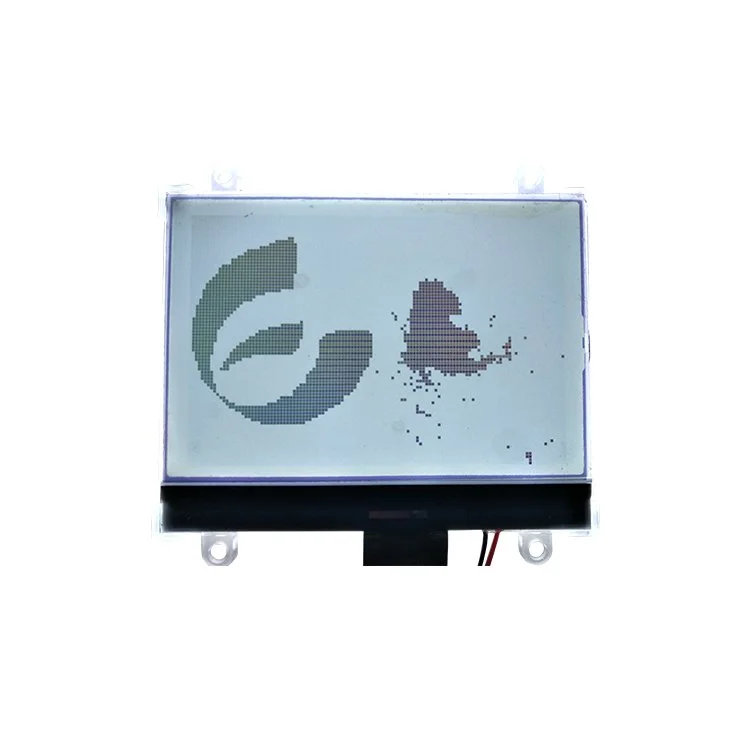
Walk up to an unattended parking payment machine or an EV charging station in Phoenix, Madrid, or Dubai at 2:00 PM in July. The cabinet hums, the status lights pulse, but the screen itself shows a massive, dark blemish right in the center. Touch interactions stop registering, the text disappears, and the machine sits dead in the water until sunset.
The screen did not suffer a software crash, nor did the power board blow out. The liquid crystal fluid inside the panel literally melted out of its functional state.
When you deploy digital displays outdoors, ambient temperature is only half of the thermodynamic equation. Direct solar radiation dumps raw thermal wattage onto the front glass, turning standard commercial displays into unreadable mirrors of black ink. Preventing this requires looking past simple nit ratings and understanding a single specification: the liquid crystal clearing temperature (Tni).
The Physics of Solar Blackout: What Actually Happens to the Glass
Why do displays turn dark under the summer sun, and why does the failure start as an irregular oval in the center?
Sunlight delivers approximately 1,000 to 1,120 Watts of energy per square meter (W/m2) on a cloudless afternoon. A display’s front glass, polarization films, and color filters absorb high portions of the infrared and ultraviolet spectrum.
The black matrix and internal filters act like thermal sinks. While the weather app on your phone reports an ambient temperature of 40°C (104°F), the internal layers of the LCD assembly easily hit 75°C to 90°C (167°F to 194°F) within sixty minutes of direct exposure.
The Isotropic Transition Point (Tni)
Liquid crystals exist in an intermediate state between solid crystalline matter and isotropic liquid. In this nematic phase, the elongated molecules stay aligned along microscopic grooves inside the panel, twisting or tilting under electric voltage to modulate light passing through.
Every liquid crystal blend has an inherent thermal threshold:
Nematic Phase: Ordered, anisotropic, electro-optically active. Light polarization functions properly.
Isotropic Phase: Chaotic, disordered, optically inactive. The fluid scatters light arbitrarily.
The temperature at which this phase shift occurs is the Clearing Point (Tni). Once internal solar heating pushes the fluid past this threshold, the molecules lose directional order. Light control collapses instantly, leaving behind the signature dark blemish known as a "solar clearing spot."
Surface Heat vs. Ambient Air: The Calculation Error
Most engineering teams specify displays based on the rated operating temperature listed on manufacturer datasheets—typically -20°C to +70°C. That rating applies to surrounding ambient air, not a dark optical stack soaking up direct radiation.
The table below highlights the thermal delta experienced by typical outdoor installations:
Reversible Glitch vs. Permanent Hardware Ruin
When an LCD panel blacks out due to thermal clearing, moving it into the shade lets the fluid cool back down. The molecules drop below the Tni line, reorganize, and restore the picture.
However, calling this failure "harmless" ignores mechanical fatigue:
Seal Integrity Loss: The liquid crystal fluid expands when it transitions into an isotropic liquid, exerting outward hydrostatic pressure against perimeter epoxy seals.
Polarizer Delamination: Repeated cycles of rapid heating and cooling warp the optical adhesives bonding the polarizers to the glass substrate, producing edge bubbling.
Moisture Ingress: Once thermal cycling fractures edge seals, atmospheric humidity creeps between the substrates, creating permanent water-stain artifacts.
Why 2,500 Nits Alone Won't Save an Outdoor Kiosk
Display buyers often think: "I bought a 2,500-nit panel, so my outdoor readability problems are solved."
A super-bright LED backlight solves the contrast problem, but it amplifies the thermal problem. Pumping 2,000 to 3,000 nits of white light through a dense color filter array consumes significant electrical power. A substantial portion of that backlight power dissipates directly inside the chassis as radiant heat.
If you match a high-powered, heat-generating LED rail with a low-tier LCD glass cell (Tni ≤ 75 ℃), the backlight warms the liquid crystal from behind while the sun assaults it from the front. The panel can trigger its own isotropic failure even on a mild 26°C day.
To run a sunlight-readable screen reliably, the high-luminance backlight must be supported by an industrial-grade glass substrate with a clearing point of Tni ≥ 105℃ or 110℃.
Engineering Checklist: How to Build a Fail-Safe Outdoor Kiosk
Surviving harsh outdoor environments requires a balanced thermal-optical stack.
1. Optical Bonding Instead of Air-Gap Integration
Standard displays leave an air gap of 1 to 3 mm between the front vandal-proof glass and the LCD polarizer. This trapped air gap causes two distinct issues:
It creates two internal boundary surfaces, reflecting roughly 8% to 9% of incident sunlight and killing visual contrast.
It behaves like a double-pane insulating window, trapping radiant heat directly against the liquid crystal layer.
Optically bonding the front protective cover to the LCD cell using an optically clear resin (OCR) or dry optical film (OCA) eliminates the internal air layer. Heat conducts straight forward through the solid glass assembly into open air, effectively using the kiosk face as a heatsink.
2. Anti-Reflective (AR) and Infrared-Cut Glass
Standard untreated float glass reflects around 4% of ambient light from each surface and passes nearly all infrared energy. Specifying front glass with multi-layer magnetron-sputtered anti-reflective (AR) coatings cuts surface reflection down to below 0.5%. Adding an infrared-reflective or IR-absorbing layer filters out invisible solar heat before it ever reaches the active display stack.
3. Smart Dimming Protocols
Never run backlights at 100% duty cycle around the clock. Integrate an ambient light sensor (ALS) with a proportional pulse-width modulation (PWM) controller:
Full Solar Peak (12:00 PM – 3:00 PM): 100% brightness (2,500+ nits) to counter glare.
Overcast or Heavy Shadow: 50% to 60% brightness (1,200 to 1,500 nits) maintains legibility while cutting internal backlight thermal loads by half.
Nighttime: 10% to 20% brightness prevents blinding users and keeps power draw minimal.
Comparison: Commercial vs. Rugged Industrial Outdoor Displays
Custom Display Solutions by Changchun Fangguan Electronics
Off-the-shelf catalog panels rarely balance the mechanical dimensions, thermal margins, and optical properties demanded by mission-critical field hardware.
Changchun Fangguan Electronics Technology Co., Ltd. engineers customized display platforms for environments where hardware downtime is not an option. Our product capabilities cover:
High-Tni Liquid Crystal Stacks: Integration of Tni ≥ 105℃ nematic material across custom panel sizes to prevent midday isotropic blackouts.
Sunlight-Readable High-Brightness Backlights: Custom LED drive arrays pushing 1,500 to 4,000 nits, tuned for high power efficiency and reduced thermal dissipation.
Optical Bonding & Specialized Glass Treatments: In-house bonding with AR (anti-reflective), AG (anti-glare), AF (anti-fingerprint), and vandal-resistant IK10 cover plates.
Non-Standard Aspect Ratios & Form Factors: Specialized stretched bar displays, square panels, and custom-cut active matrices for tight EV charger and kiosk chassis enclosures.
Whether you are building roadside EV charging infrastructure, desert railway information boards, or automated gas station terminals, we tailor the mechanical, thermal, and optical layers to your enclosure requirements.
Frequently Asked Questions
Can an LCD screen fail from solar heat even if the ambient air is cool?
Yes. If the kiosk faces a cloudless sky at high altitude, solar irradiance remains intense while the ambient air might sit at only 15°C to 20°C. If the enclosure lacks thermal conduction or ventilation, internal dark components will trap radiation, pushing the local cell area past its clearing point.
Does high humidity change how solar clearing happens?
Humidity does not alter the clearing temperature point (Tni) itself, which is a fixed chemical property of the liquid crystal compound. However, high moisture accelerates edge degradation. If a panel repeatedly expands and contracts through thermal clearing cycles in a humid, tropical coastal city, moisture will penetrate the glass seals significantly faster.
Why not just put an air conditioning unit inside every outdoor kiosk?
Active compressor air conditioners add upfront hardware costs, consume massive electrical power, increase cabinet footprints, and introduce complex mechanical maintenance (such as filter cleaning and compressor leaks). Designing passive cooling paired with a high-Tni (≥ 105℃) panel is simpler, cheaper to run, and far more reliable over a five-to-ten-year deployment lifespan.
What is the difference between Anti-Glare (AG) and Anti-Reflective (AR) treatments?
Anti-Glare (AG) is a mechanical or chemical etch on the glass surface that scatters reflected light, turning sharp reflections into diffuse, soft light. Anti-Reflective (AR) is a microscopic optical thin-film coating that uses destructive light interference to cancel out reflections entirely. For extreme sun exposure, combining an AG finish with an AR coating provides the best legibility and lowest radiant heat build-up.
Will high-$T_{ni}$ displays slow down in freezing winter conditions?
Liquid crystals naturally become more viscous at low temperatures, which can increase pixel response times (causing text ghosting when menus change). Industrial-grade outdoor displays pair wide-nematic liquid crystal blends (Tni ≥ 105℃ at the top end) with low-temperature fluid bases and optional transparent ITO glass heaters, preserving fast response times down to -30°C or -40°C.