Display IPS vs TN: How to Select the Right Panel for Your Product Line
When developing embedded devices, medical interfaces, or industrial HMIs, display panel selection dictates the overall user experience and field reliability. For hardware engineers and OEM product managers evaluating display architectures, the debate almost always centers around Display IPS vs TN.
Both technologies utilize liquid crystal active matrix assemblies, yet their molecular alignment mechanisms produce vastly different optical outputs, thermal tolerances, and cost profiles.
This guide breaks down the core technical differences between IPS (In-Plane Switching) and TN (Twisted Nematic) TFT panels, helping you make the right hardware trade-offs for your embedded systems and product lines.
1. Technical Architecture: How Liquid Crystals Operate
The fundamental performance differences between IPS and TN panels stem directly from how the liquid crystal molecules are oriented and actuated by the thin-film transistors.
TN (Twisted Nematic): In an uncharged state, liquid crystal molecules twist 90 degrees between two glass substrates. When voltage is applied, the molecules untwist perpendicularly to the substrate plane. While this allows rapid switching (fast pixel response), off-axis viewing causes severe light leakage and phase distortion.
IPS (In-Plane Switching): Electrodes sit on the same substrate plane. When driven by current, liquid crystals rotate strictly parallel to the screen surface. Because the crystal director stays horizontal relative to your line of sight, the optical light transmission remains exceptionally consistent from extreme angles.
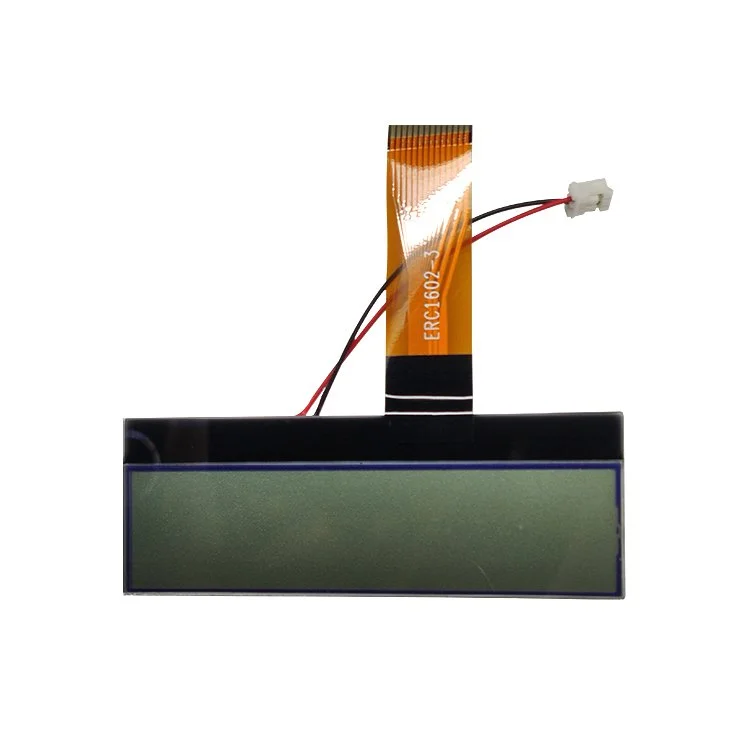
2. Display IPS vs TN: Engineering Specification Breakdown
The table below contrasts both architectures across the parameters that hardware teams evaluate during prototype scoping:
3. Critical Hardware Selection Criteria
A. The Grayscale Inversion Trap (Crucial for Industrial & Medical Devices)
The biggest limitation of TN panels in real-world deployment is grayscale inversion. When an operator looks up at a standard TN screen from below (or from a wide offset angle), dark colors flip to light, and light shades flip to dark.
If your device is mounted on a factory wall, embedded in an automotive dashboard, or placed on a movable medical cart, an operator cannot always face the screen at a perpendicular 90° angle. In these environments, IPS is the clear choice, eliminating inversion risks and ensuring data readouts remain legible from any position.
B. Touch Surface Resistance & Lamination
For projects requiring integrated touchscreens (such as PCAP capacitive or resistive touch panels):
TN panels produce localized discoloration (a visible "water ripple" effect) when physical pressure touches the raw liquid crystal layer. Overcoming this requires an air gap or thicker front glass.
IPS panels operate parallel to the substrate, making them naturally resilient to physical pressure. They pair exceptionally well with optical bonding (OCA/OCR) and custom cover lenses, preventing touch distortion entirely.
C. Unit Economics vs. Interface Usability
If your hardware:
Is fixed strictly at head height,
Serves a single operator facing straight ahead,
Features a basic segment-like or alphanumeric menu interface, and
Requires an aggressive Bill-of-Materials (BOM) target,
then a TN TFT display module remains a viable, field-proven, and cost-effective solution.
4. Application Matching Matrix
Select IPS When: You need wide viewing clarity (multi-operator environments), color-critical diagnostics (patient vital monitoring, imaging), ruggedized optical bonding, or outdoor readability with high-brightness LED backlights.
Select TN When: You are manufacturing cost-sensitive batch devices, dedicated handheld tools with direct front-on viewing, or legacy industrial electronics where fast refresh and strict BOM controls dominate the spec sheet.
5. Custom TFT Module Solutions by Changchun Fangguan Electronics (FG LCD)
At Changchun Fangguan Electronics Technology Co., Ltd. (FG LCD), we engineer and supply both high-performance IPS and reliable TN TFT LCD modules tailored to OEM mechanical and electrical specifications:
Custom Optical Stacks & High-Nit Backlights: Upgrading both IPS and TN panels with high-efficiency LED arrays (500 to 1,500+ nits) for full daylight visibility.
Touch Sensor Integration: Seamless integration of Projected Capacitive (PCAP) and Resistive touch panels, supporting wet-hand, saline, and industrial thick-glove operation.
Rugged Mechanicals & Cover Glass: Custom shapes, anti-glare (AG), anti-reflective (AR), and anti-fingerprint (AF) chemical coatings with full OCA/OCR optical bonding.
Turnkey Driving Boards & Interfacing: Comprehensive support for LVDS, eDP, MIPI DSI, and RGB TTL, alongside plug-and-play HDMI / Type-C bridge boards for rapid embedded prototyping.
FAQs
Q1: In the Display IPS vs TN comparison, which is better suited for outdoor sunlight use?
IPS is generally preferred for outdoor applications. Because sunlight reflections hit the screen from multiple angles, the wide viewing angles and higher native contrast of an IPS panel—especially when paired with optical bonding and an anti-reflective (AR) coating—deliver superior contrast and legibility compared to TN panels.
Q2: Can TN panels achieve wide viewing angles?
While wide-viewing film (O-film) can expand the horizontal field of view on a TN panel, it cannot completely resolve the vertical grayscale inversion issue. For genuine 170°+ all-around viewing angles, native IPS technology remains the engineering standard.
Q3: Does an IPS module consume more power than a TN module?
Because the liquid crystal structure of an IPS panel transmits slightly less light in passive states, it typically requires a fractionally more powerful backlight to hit the same luminance targets as a TN panel. However, using high-efficiency LED drivers and modern timing controllers (TCONs) minimizes this operating variance in embedded applications.
Need Help Choosing Between IPS and TN for Your Project?
Send your mechanical footprint, interface specs, and environmental targets to our engineering team. Changchun Fangguan Electronics will evaluate your CAD models and provide sample modules for testing.
Website: fglcd.com
Inquiries: info@fglcd.com
Core Offerings: Standard & Custom TFT Displays, LCD Modules, Touch Panel Assemblies