Bar-Type / Stretched Displays: 14.7" & 14.8" TFT Panels Applications
Modern industrial control panels, automotive center consoles, and intelligent medical systems are increasingly constrained by physical enclosure dimensions. When standard 4:3 or 16:9 aspect ratios cannot fit into shallow, horizontally driven spaces, 14.7-inch and 14.8-inch bar-type (stretched) TFT LCD panels serve as the definitive solution.
These stretched form factors provide high-density graphical visualization across an ultra-wide panoramic canvas without inflating enclosure height, system weight, or thermal footprints. Below is an engineering and OEM integration overview detailing the display architecture, power efficiency, durability benchmarks, and manufacturing capabilities of 14.7" and 14.8" TFT display modules.
1. Engineering Rationale: Why OEMs Specify 14.7" and 14.8" Stretched Panels
The 14.7-inch and 14.8-inch diagonal classes sit at a critical intersection of mechanical fit and data throughput:
Panoramic Aspect Ratios for Restrictive Profiles:
Standard display formats create substantial vertical dead space. Stretched designs maximize visible pixel area in long, narrow chassis apertures (such as 1U/2U server racks, shelf-edge strips, and vehicle dashboards).
Multi-Window UI Without Screen Switching:
The wide aspect ratio allows instrument clusters, status monitors, and real-time waveforms to be displayed side-by-side without requiring menu switching.
Thermal and Electrical Predictability:
Unlike self-emissive displays (OLED/AMOLED) where power consumption fluctuates wildly depending on the Average Picture Level (APL), TFT LCD power is dominated by a steady-state LED backlight. For diagnostic graphs, instrument bars, and white-background UIs, power consumption remains constant and predictable.
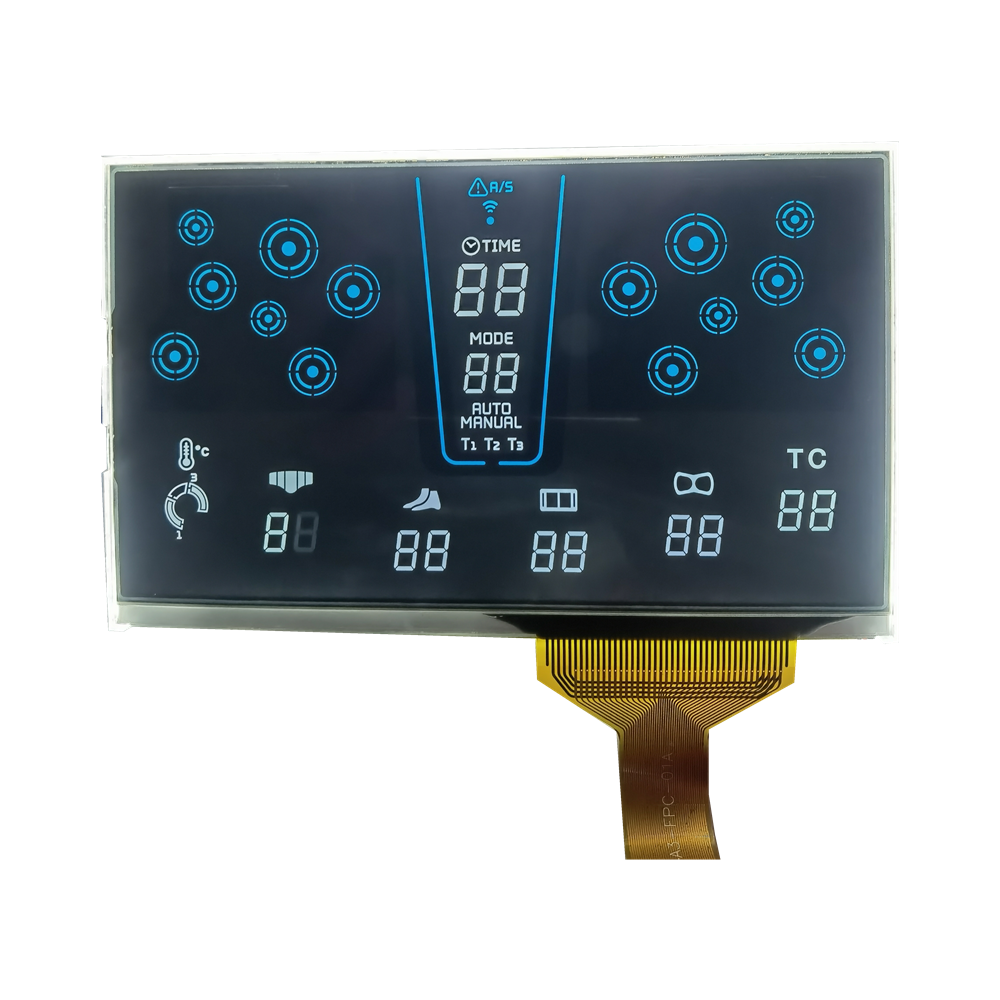
2. 14.7" vs. 14.8" Technical Specifications Overview
Both sizes function within the bar-type display family, but vary slightly in active area heights, resolution standards, and driving interfaces:
3. Technology Comparison: 14.7" & 14.8" TFT LCDs vs. Alternative Display Types
When deciding between stretched TFT LCDs and alternative panel architectures for embedded equipment, consider the following trade-offs:
4. Energy Efficiency & Thermal Optimization
In fanless enclosures, medical housings, and battery-assisted terminals, excess heat and high current drain create design bottlenecks. Our 14.7" and 14.8" modules implement three key efficiency measures:
High-Transmission Light Guide Plates (LGP):
We pair high-efficiency LED chips with optimized light-guide microstructure layouts to deliver specified nits at reduced forward drive current, preventing hotspots.
Dynamic Backlight Control (DBC) & PWM Dimming:
Modules support hardware-level dimming linked to host ambient-light sensors. Backlight luminance automatically scales down in dim control rooms or nighttime vehicle operation, reducing power consumption by up to 45%.
Low-Power Timing Controllers (TCON):
Driver ICs support deep sleep and low-refresh idle states, reducing baseline motherboard power draw during low-activity cycles.
5. Industrial Durability & Optical Enhancement
To perform under constant vibration, mechanical shock, and fluctuating temperatures, our modules can be configured with enhanced optical and mechanical layers:
Optical Bonding (OCA / OCR):
Liquid optically clear resin (OCR) or dry optically clear adhesive (OCA) is applied between the TFT cell and the protective cover glass. This eliminates the internal air gap, cuts ambient surface reflections by up to 60%, and completely prevents internal fogging in humid or outdoor settings.
Surface Treatments:
Anti-Glare (AG): Chemically etched surface scatters point-source light, keeping screens readable under bright overhead factory lighting.
Anti-Reflective (AR): Multi-layer dielectric sputtering minimizes reflectivity to less than 1.5%.
Anti-Fingerprint (AF) & Hard Coatings: Hydrophobic top layers reject skin oils and debris, maintaining 7H+ pencil surface hardness against sharp tools.
Rugged Mechanical Assemblies:
Frames use corrosion-resistant galvanized iron (SECC) or aluminum alloys with designated mounting tabs, isolated grounding points, and built-in EMI shielding gaskets.
6. Target Application Scenarios
A. Transportation & Automotive
Secondary Infotainment & Climate Pods: Slender horizontal strips positioned underneath primary displays to control HVAC, seat adjustments, and auxiliary media.
Specialized Fleet & Transit Clusters: Real-time route displays, passenger status monitors, and multi-channel driver aid cameras in buses, trains, and delivery vehicles.
B. Medical Carts & Diagnostic Systems
Vital Sign Banners & Waveform Strips: Displays continuous ECG, SpO2, and blood pressure graphs without obscuring central camera or scanner views.
Sealed Interfaces: Glass-to-edge designs can be scrubbed down with bleach and hospital-grade sanitizers without fluid egress.
C. Industrial HMI & Rack-Mounted Instruments
1U/2U/3U Rackmount Monitors: Integrates directly into industrial server cabinets and network diagnostic chassis.
Smart Factory Machinery: Edge-of-line manufacturing telemetry, conveyor status monitors, and process control terminals.
7. Precision Manufacturing Process at Fangguan Electronics
Every 14.7" and 14.8" module undergoes a controlled fabrication workflow to guarantee precision and yield:
8. Customization Services by Changchun Fangguan Electronics
Changchun Fangguan Electronics Technology Co., Ltd. (FG LCD) provides end-to-end design, prototyping, and mass manufacturing for custom 14.7" and 14.8" projects:
Optical Customization: Tailored backlight assemblies reaching 500 to 1,500+ nits; customized optical film stacks; full OCA/OCR optical bonding.
Touch Panel Integration: Projected Capacitive (PCAP) multi-touch integration supporting multi-finger tracking, thick industrial glove use, and surface moisture rejection.
Cover Glass Engineering: Custom shapes, chamfered or rounded edges, screen-printed border inks, IR-cut pass filters, and corporate logo silkscreening.
Interfacing & Drive Electronics: Tailored FPC pin assignments, custom routing geometry, and integrated bridge boards (HDMI / Type-C / DisplayPort to LVDS/eDP).
Compliance & Longevity: Guaranteed component availability with BOM freezing for long-lifecycle programs, backed by RoHS, REACH, and CE compliance testing.
Frequently Asked Questions (FAQ)
Q1: Can 14.7" and 14.8" stretched displays be read under direct midday sunlight?
Yes. We pair high-efficiency LED arrays (1,000+ nits) with optical bonding and anti-reflective/anti-glare surface treatments to eliminate internal reflection wash-out under harsh daylight.
Q2: What touch controllers are used for non-standard bar aspect ratios?
We configure and tune industrial capacitive controllers from proven vendors (including EETI, Goodix, and ILITEC) to ensure coordinate accuracy across the long, narrow touch matrix.
Q3: Can these modules be connected directly to an HDMI source or Raspberry Pi?
Yes. While the bare panel communicates via native LVDS or eDP, we design and supply matched A/D driver boards that accept standard HDMI, DisplayPort, or USB-C inputs.
Q4: How do you address vibration stress in commercial vehicles?
We employ reinforced chassis housings, double-sided adhesive framing, silicone damping gaskets, and structural optical bonding to absorb road shock and mechanical vibration.
Ready to Integrate a 14.7" or 14.8" Stretched Display?
Contact Changchun Fangguan Electronics Technology Co., Ltd. today to discuss your project requirements, request a CAD drawing, or schedule prototype samples.
Website: fglcd.com
Email: info@fglcd.com
Product Line: Custom TFT LCD Displays & Touch Modules